

Making Sense of E-Mobility!
Piher provides vehicle non-contact position sensors and potentiometersthat enhance vehicle safety, efficiency and performance. We maintain long-standing partnerships across the global automotive industry and are certified to the IATF 16949 standard.Our development capabilities include components designed for functional safety requirements up to ASIL-D safety integrity, supporting safety-critical vehicle systems such as braking, camshaft speed, throttle and steering.
We collaborate with our clients to engineer products that directly support vehicle performance and regulatory compliance. Our technologies are used across a wide range of systems, including engines and powertrains, AFL headlamp leveling, gear position, battery systems, HVAC, seat positioning, transmissions in commercial and off-road vehicles, steering systems and human-machine interfaces.
Piher’s automotive linear and rotary affordable non contacting position sensors and potentiometers assist transportation OEM companies in meeting demanding emissions regulations.
HOW CAN WE SUPPORT YOU?
Share your current automotive-grade projects with us, and we’ll be happy to support your progress.
Design help is provided for automotive switches for example: centre console switchpacks, door lock & seat memory, master light, multi-function seat switches, multi-media interfaces, power window – sunroof lifters and steering wheel switches.
APPLICATION EXAMPLES
ELECTRIC MOTORS
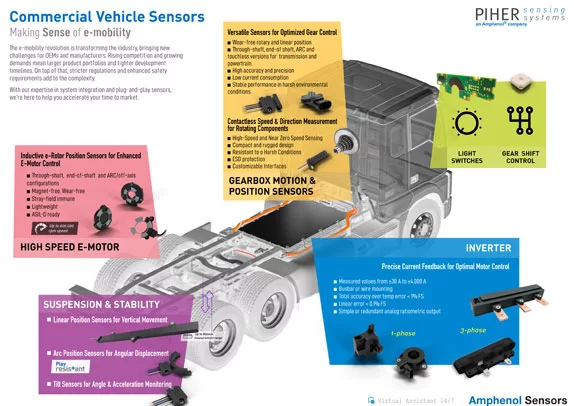
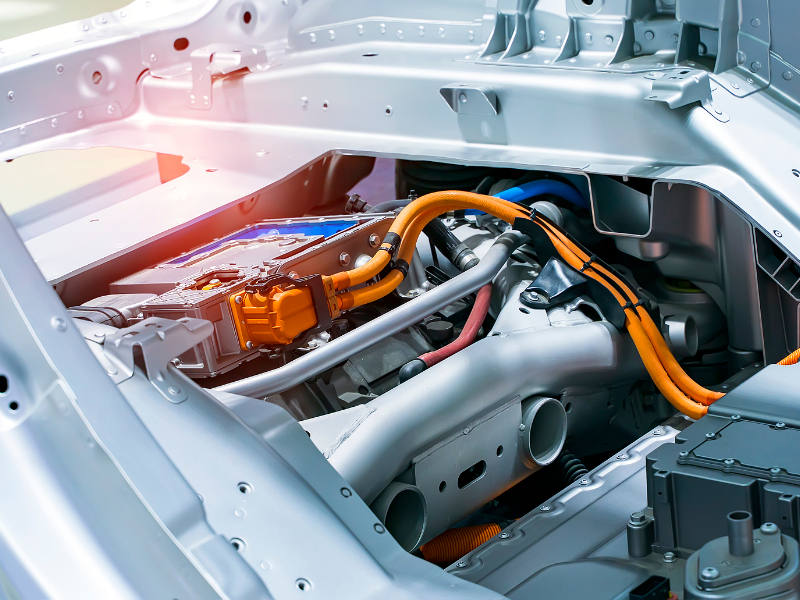
HEV and BEV powertrain development increasingly requires cost and size optimization. Inductive motor position sensors provide stray-field-immune, precise high-speed rotor position measurement, offering a compact and cost-effective alternative to traditional technologies such as resolvers.
VEHICLE BATTERY SYSTEMS
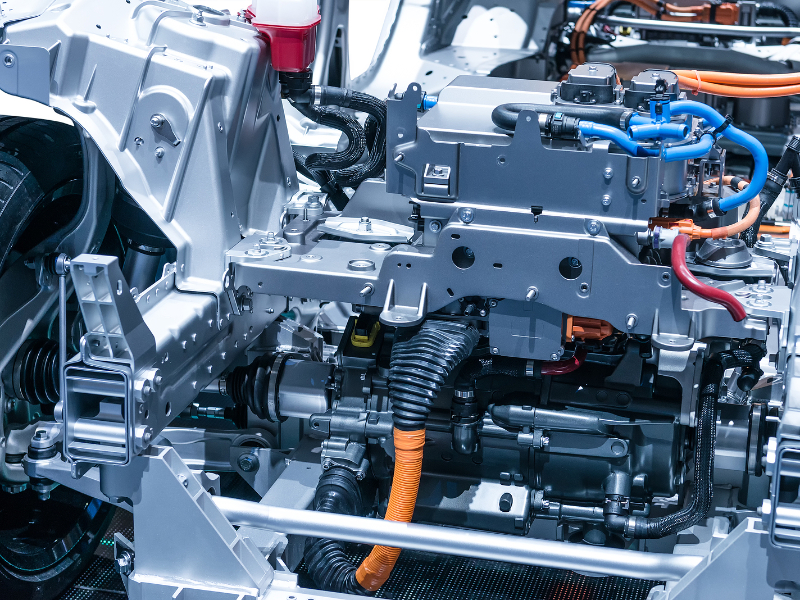
Battery management systems, motor controls and inverters depend on precise current measurement to protect against overload and meet application requirements. Current sensors sensors isolate the measured circuit from the control circuit and return a signal proportional to the applied current.
TRANSMISSIONS
Input and output speed, park-lock position, gear speed and gear position are just a few applications in the vehicle drivetrain that depend on precise position measurement. Based on our expertise we have developed various custom inductive and hall sensors for automotive and truck applications on ASIL level.
Sensor Development for the Automotive Transmissions / E-Axle Sensors
GEAR SHIFTER
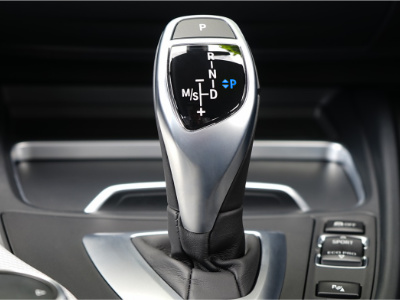
In automatic vehicles the gear shift determines the direction of travel of the vehicle. Modern shift-by-wire applications do not depend on mechanical connections but instead transmit an electric signal to the transmission. The position can be measured either contactless or contacing position sensor.
DRIVE-BY-WIRE SYSTEMS
Non-contact pedal position sensors based on inductive or Hall-effect technology are part of modern pedal-by-wire systems that replace conventional mechanical linkages. Depending on the required level of functional safety, redundancy measures can be implemented while retaining the benefits of simple mounting and low-maintenance operation.
AUTOMOTIVE ACTUATORS
Subsystems such as HVACR, mirror memory or fuel level systems rely on position sensors to feedback air damper position, mirror movement or fuel level. Depending on the application, potentiometers, specific HVAC sensors of printed resistors on a PCB can offer a space-saving and cost-efficient solution.
Automotive Switch Components for Vehicle Controls
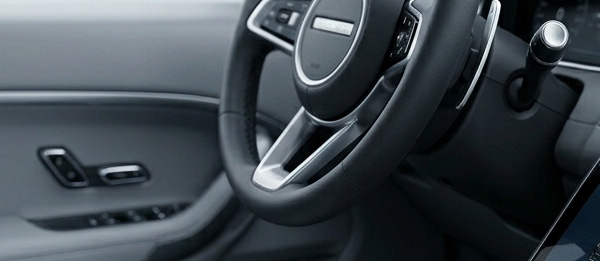
We support manufacturers of automotive switch systems with custom potentiometers and printed ink PCBs for steering wheel switches, head lamp switches, instrument panel switches, shift-by-wire controls, drive controls, roof modules, steering column switches, switch panels and comfort controls. Our printed resistive tracks,and potentiometers help integrate precise position sensing, reliable electrical performance and compact mechanical design into modern vehicle interface modules.
Automotive switches and sensors must deliver long-term, interference-free reliability under extreme conditions to support critical vehicle systems, which is why strict standards like IATF 16949, ISO 26262, and AEC Q100 define what qualifies as automotive grade.